
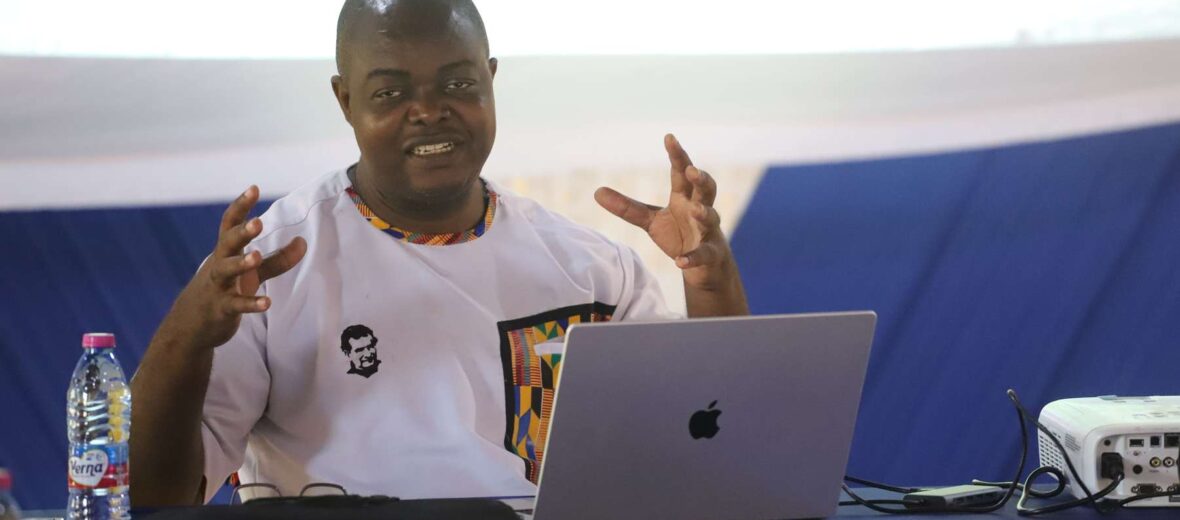
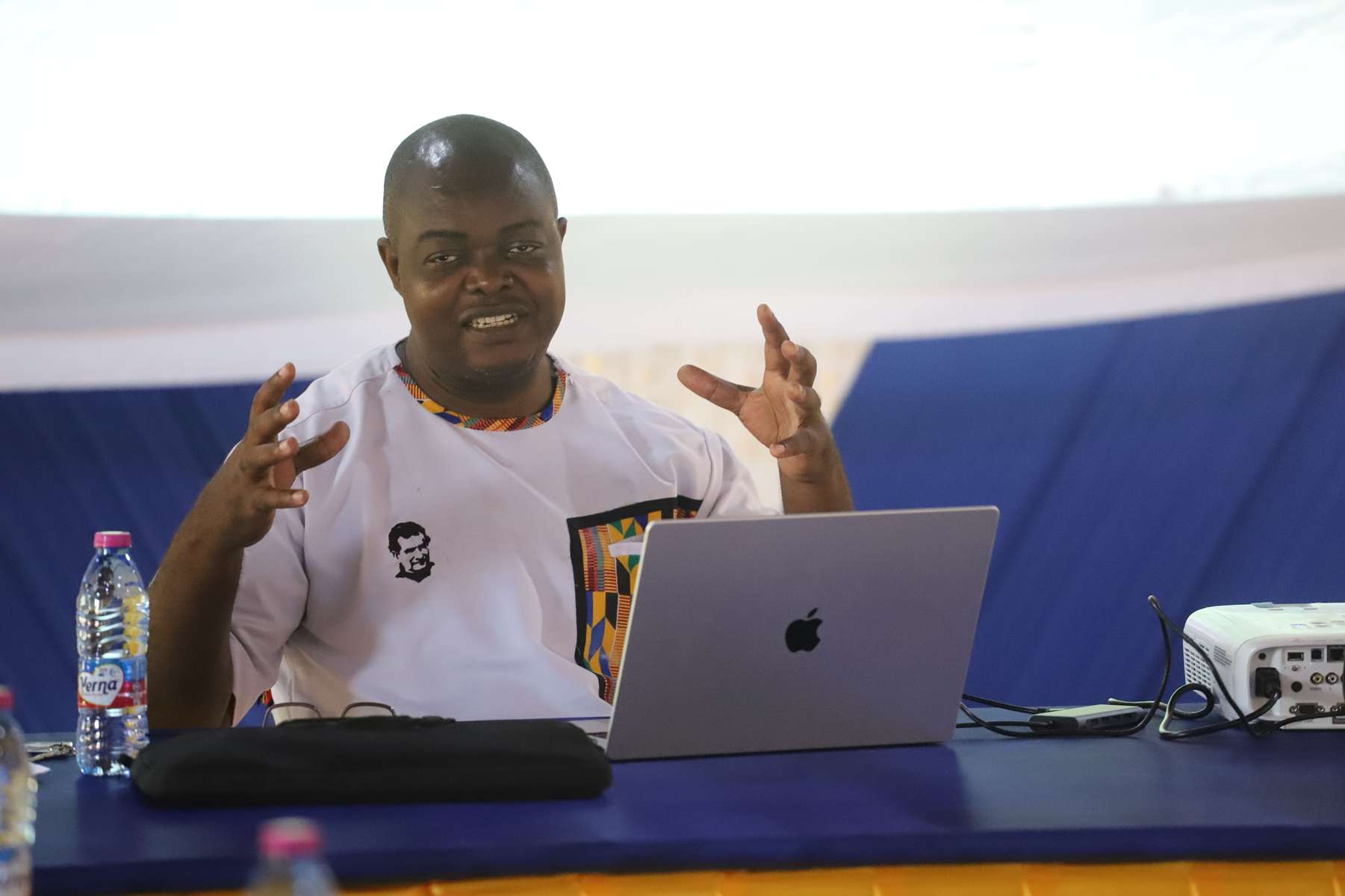
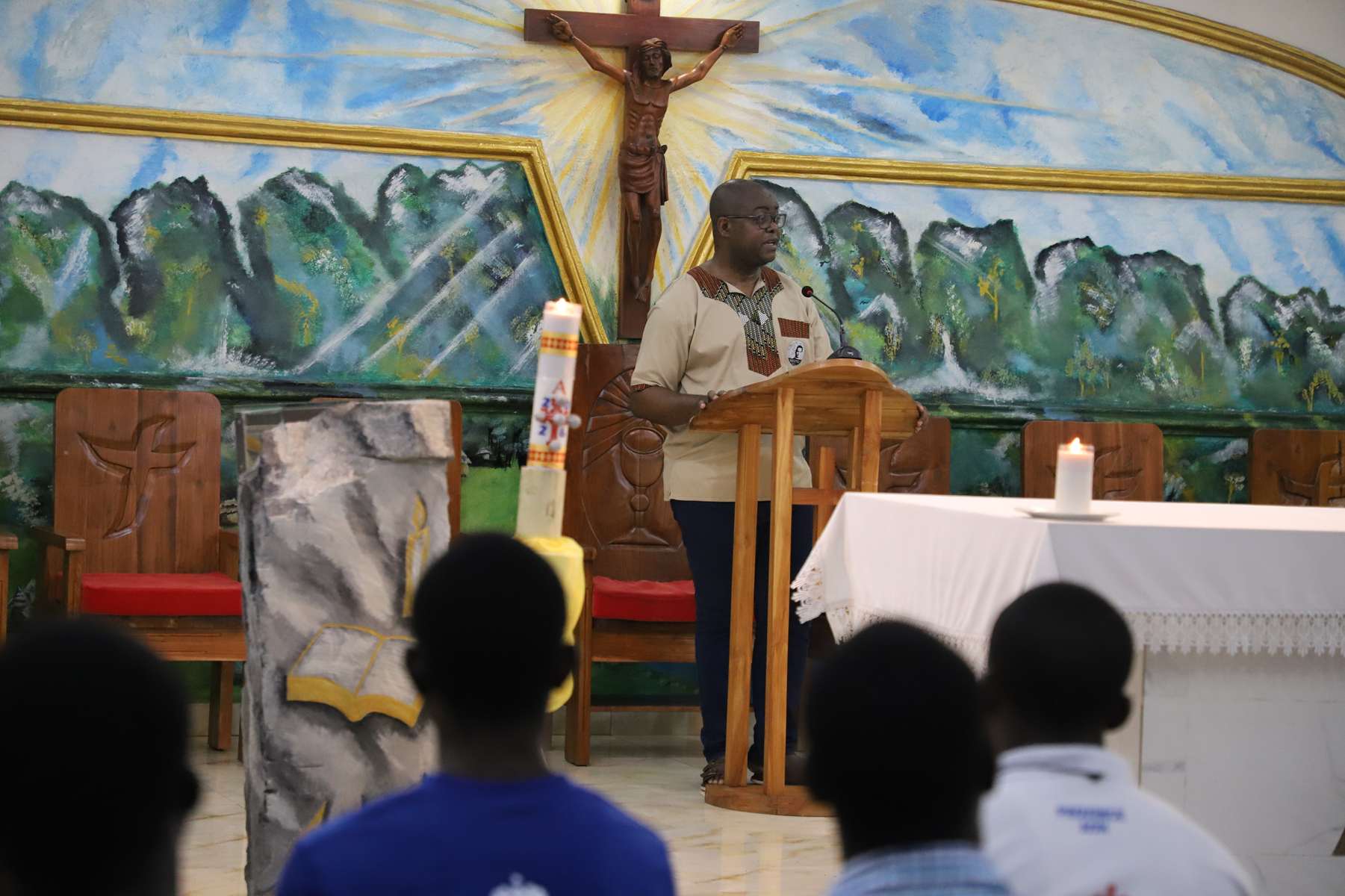
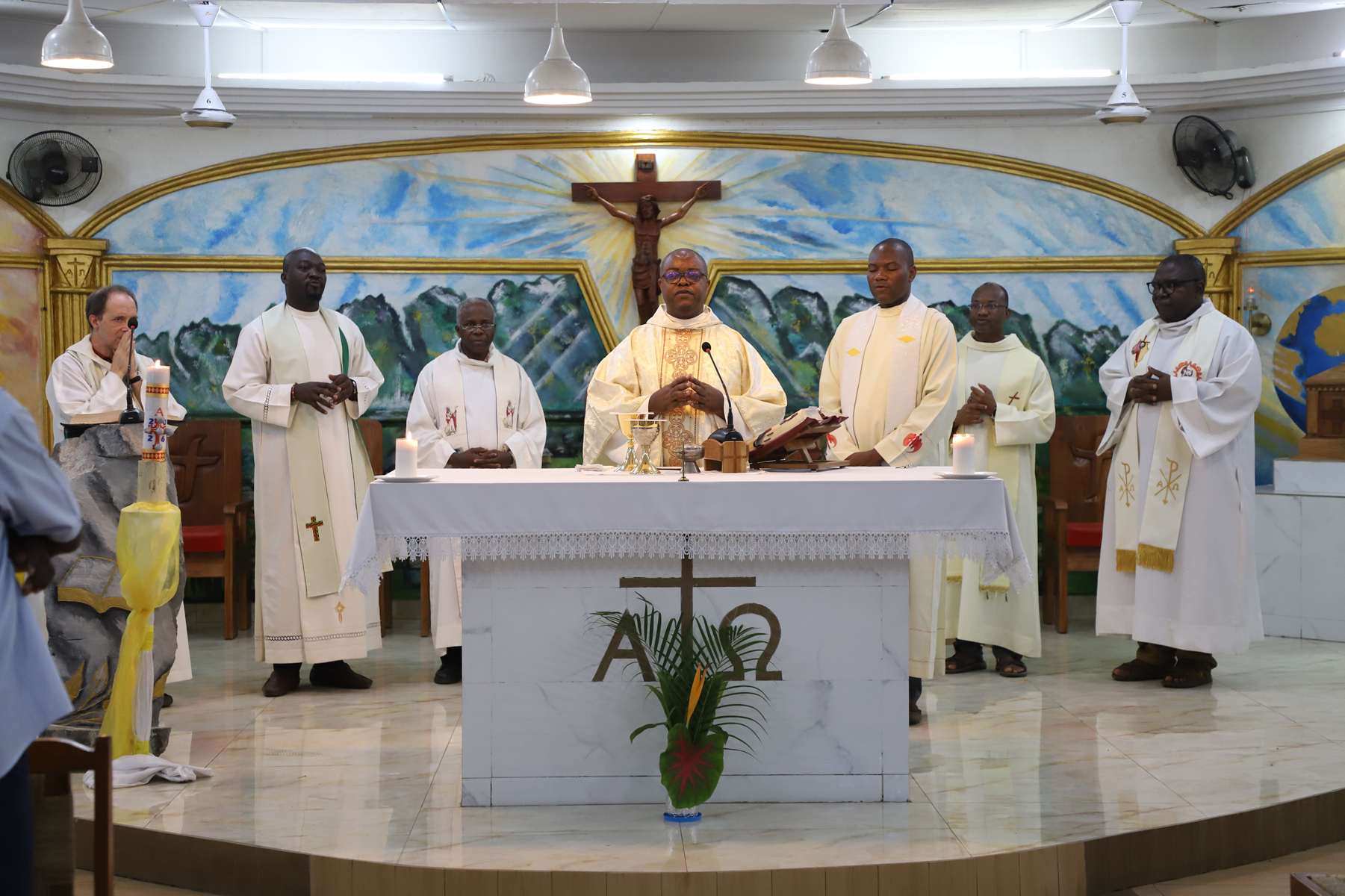
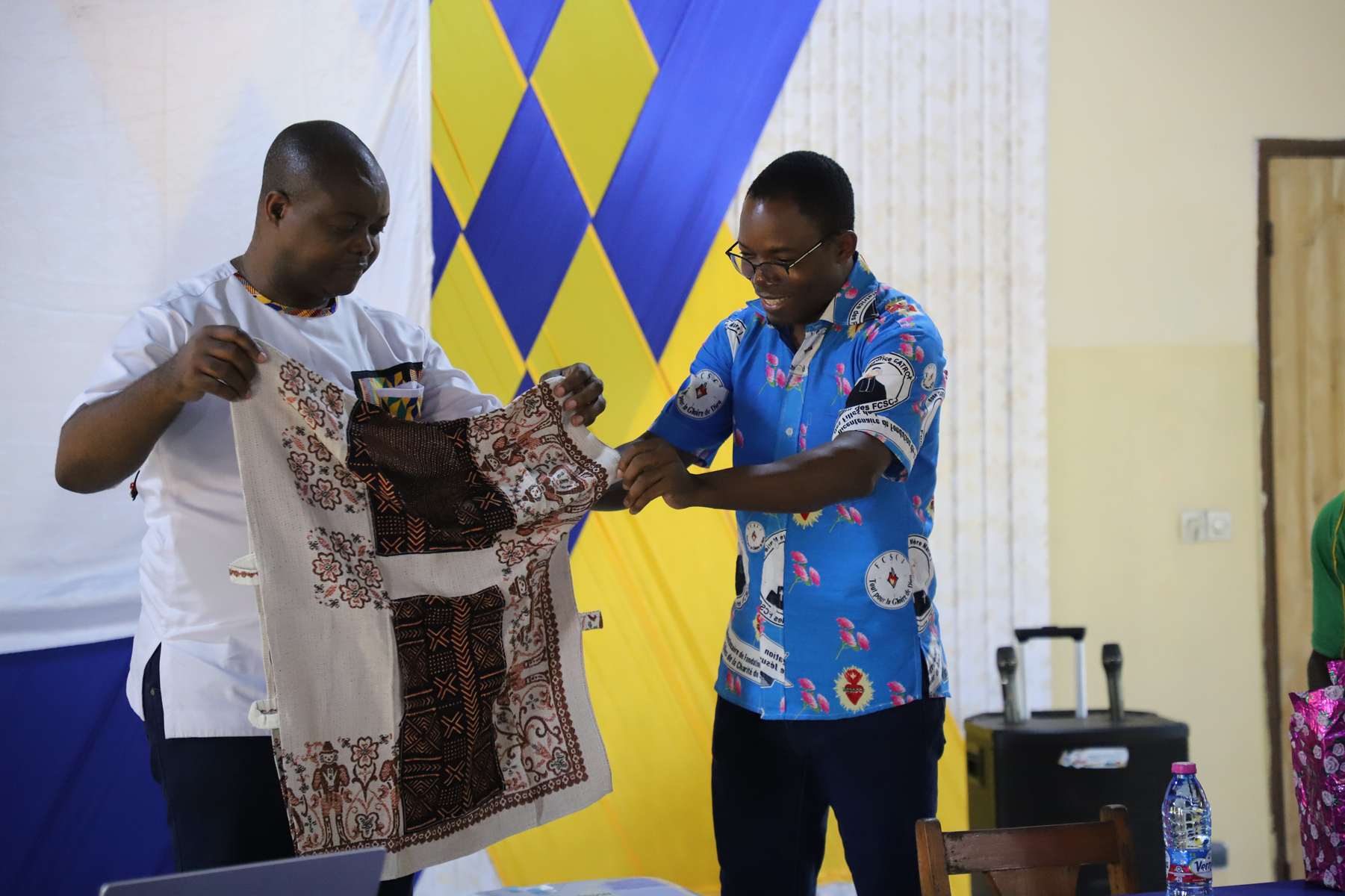
From 13 to 14 May 2026, the Salesian post-novitiate in Lomé hosted the 2026 curatorium meeting to review the progress of the two novitiates and the post-novitiate within the AOS Province. The meeting was convened by Fr Alphonse Owoudou, General Councillor responsible for the Central and West Africa Region. Following the meeting, Fr Alphonse reflects on the event, highlighting the importance of the curatorium for the running of the formation houses, the decisions taken during the meeting, and his expectations.
- Reverend Fr Alphonse, you have just chaired the annual meeting of the Curatorium for the novitiate and post-novitiate houses in our AOS Province. Could you please tell us about the significance of this meeting for Salesian formation?
The Curatorium is a very important occasion because it reminds us that Salesian formation is never the responsibility of a single house, nor even of a single Province. It is a shared responsibility. When several Provinces entrust their young confreres to the same house of formation, they must also jointly ensure the quality of that formation, the stability of the teams, spiritual guidance, intellectual rigour, community life and fidelity to Don Bosco’s charism.
In the spirit of the new Ratio, the Curatorium thus becomes a place of discernment, communion and shared responsibility. It helps us to assess whether our houses of formation are truly producing Salesians who are competent both personally and in terms of the charism, ready for the mission, close to young people, and capable of living the Salesian vocation with joy and authenticity.
During the Evening Reflection, in the context of the Vigil of the Ascension, I pointed out that two aspects are crucial for our young confreres: motivation and competence. Motivation is the will to act; competence is the ability to act. If a young confrere does not cultivate these two qualities, even the best formators will find it difficult to support him effectively. One cannot form someone against their will. Formation presupposes grace, of course, but also a freedom that responds, an intellect that works, a heart open to guidance, and hands ready to serve. The Curatorium helps us precisely to look at all this with clarity: not only the structures, but also the dispositions needed to be able to follow Christ in the manner of Don Bosco: men of faith, well-balanced and endowed with the inner and practical aptitudes necessary to successfully embrace the sequela Christi in the style of Don Bosco.
- What decisions and new developments were discussed at this Curatorium meeting?
This Curatorium highlighted several key points. Firstly, there is a very clear emphasis on the various dimensions of formation. The decisions and recommendations stress the need to ensure the intellectual dimension of accompaniment, to scrutinise admission documents more closely, to provide for a physical health check-up and a psychological assessment prior to certain stages, and to help young confreres take their studies and manual work seriously as true Salesian values.
There is also a strong focus on bilingualism, particularly French and English, not to mention Portuguese. This is very important for our Region, because the Salesian mission in Africa cannot remain confined within overly narrow linguistic boundaries. Fostering bilingualism also means fostering missionary mobility, cultural openness, interprovincial collaboration and better integration within the Congregation.
Another significant point concerns technology, particularly ICT and artificial intelligence. The Curatorium calls for training to improve understanding and ensure the appropriate use of these tools. This shows that Salesian formation cannot remain nostalgic for a world that no longer exists, nor continue as in the past to demonise the telephone, the internet, etc. The young people we accompany already live in this digital world; our formators and our communities must therefore learn to inhabit it with intelligence, prudence, creativity and pastoral sensitivity (cf. GC29).
Finally, there is a very significant development on the economic front: the call to encourage training centres to become self-sufficient through income-generating activities, as well as improved communication between Provincials to address human and financial needs. This is a delicate but essential point. The Congregation and the Procuratorates have, until now, been very generous towards Africa. We must acknowledge this with gratitude. But we must also understand that the cost of formation, of training our confreres, teachers and formators, is becoming increasingly burdensome. This is not to say that the Congregation is abandoning us; on the contrary, it is a matter of entering into a greater maturity, where the solidarity received becomes, in turn, a responsibility assumed.
- What are your expectations following this meeting?
My main hope is that this Curatorium will not remain merely a fine exercise in reflection, but will become a genuine plan for educational, community and economic transformation. We must emerge from it with decisions that are implemented, evaluated and supported. L’Afrique est souvent présentée comme un poumon de l’Église catholique, et l’on dit aussi que l’Afrique et l’Asie représentent l’avenir de la Congrégation. C’est vrai, et c’est une belle déclaration, un peu trop facile quand il faut en payer le prix. Mais je dois ajouter avec lucidité que ces deux régions sont aussi celles qui enregistrent beaucoup d’entrées et de sorties. C’est là que se croisent l’enthousiasme des jeunes pour le charisme salésien et l’urgence d’une formation solide, exigeante et bien accompagnée.
It is an immense blessing, but also a heavy responsibility. We cannot simply rejoice at the number of vocations. We must ask ourselves: how deep are these vocations? What is their true motivation? What is their human, spiritual, intellectual and pastoral background? What resources are we providing to formators to support these young people properly? And what financial structures are we putting in place to ensure that formation does not become an unbearable nightmare, where the economic crisis pushes the support and personal development of each confrere into the background?
I therefore expect our Provincials in Africa to work even more closely together. They should, where necessary, coordinate their PDOs, their development offices, their networks of friends and their partners. Not merely through exhortations, but through a genuine plan to support, monitor and evaluate income-generating initiatives. We must avoid falling back into the temptation of ‘quotas’, which some Provinces have at times adopted in the past when they could no longer bear the cost of training large numbers of people. The solution is not to mechanically reduce the number of vocations; it is to discern better, support better, train better and organise solidarity better.
The Editorial Staff
Togo – Fr Alphonse Owoudou: “The Curatorium thus becomes a place of discernment, communion and shared responsibility”